Introduction
Polymers is one of the most dominant material used in the industry as majority of the products today uses polymer, However the resources is limited and each time polymers is recycled it degrades in quality so it is not a sustainable resource. So a replacement material is absolutely required to replace plastics.
Another material that is high on demand is aluminium, there is a large abundance in Aluminium but the ore is processed from is bauxite and that uses a lot of energy to achieve to the aluminium form.
The goal is to be able to locate a material, which will have versatile properties, which can replace both materials.
Research
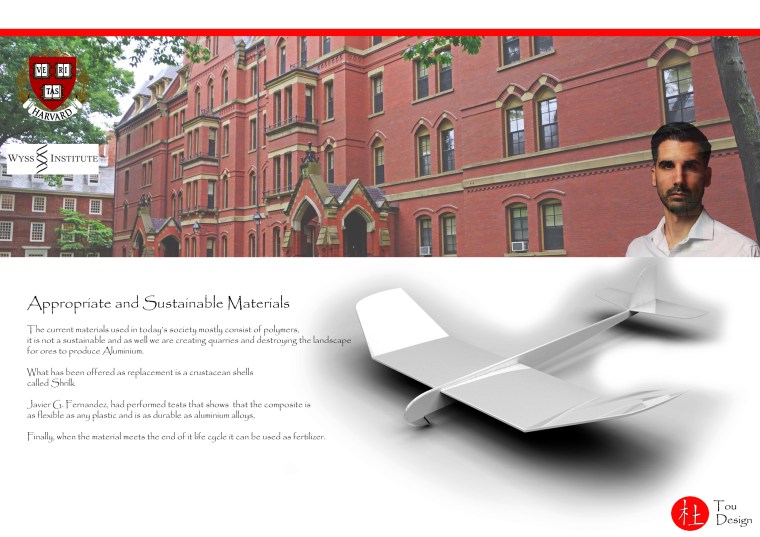
When selecting a material to replace the current, I have come across Shrilk which is a material made of crustacean shells, so I had got in contact with the scientist Dr Javier Fernandez, which designed this material.
Background
The history of Shrilk is that it originally started out of people using Chitin (glucose from crustacean shells) as a fertilizer produce. However, scientist in Harvard University had taken interest of the molecular structure of Chitin as it has a very strength and toughness, which is comparable to Aluminium Alloys and the flexibility of most plastics. Therefore, the aim that was set for them is to try to harness the raw material and make it a mass produced industrial material.
If the scientists are able to reproduce the structure of the insect shell, it would be able to achieve certain heights as it will be able to replace a lot of materials used in society today. Also there will be a large abundance of chitin available as there are many shrimp farms in the world and even though it is bad for the environment to create Shrimp farms, it is still needed as there is a large demand of shrimps worldwide in the food industry. Therefore if Shrilk can be produced, it will lessen the negative impact of Shrimp farms as it will be used to reduce the use of polymers.
Insect cuticles, crustacean shells, and other chitin-containing living materials have an unusual strength and toughness and it is because of the complex structural interactions between chitin polysaccharides and proteins in these materials. Chitin is also second most abundant material in the world as it is the glucose molecule found in exoskeleton.
It has been difficult to engineer artificial materials that reproduce the exact properties of the Crustaceans because during the moulding of Chitosan the processed version of Chitin, the material had no 3D structure and could not hold itself up. However, soon Fibroin, which is a protein like structure found in silk, was used in Chitosan to give it a more 3D physical structure, however, it did not display the desired strength properties instead was weaker than Chitosan.
The reason for the poor material properties of chitosan-silk composites is that they are disorganized conglomerates, that is, they fail to regenerate the phase-separated laminar arrangement of the closely apposed chitin and protein found in natural cuticle.
Life Cycle Assessment
To show that Shrilk is a versatile material and is able to replace a current product that uses polymers and aluminium, the LCA assessment have been made for the Paraglider which will be manufactured for a batch production in industry, and there will be comparison between the two material selections.
| Production with Material A | ||||
| Material or Processes | Amount | Indicator | Result | |
| Aluminium 100% Recycled | 1000 | 60 | 60000 | |
| PVC (Flexible) | 1000 | 240 | 240000 | |
| Total | 2000 | 300 | 300000 | |
| Use with Material A | ||||
| Process | Amount | Indicator | Result | |
| Bending Aluminium | 7000 | 0.000047 | 0.329 | |
| Extrusion Aluminium | 7000 | 72 | 72000 | |
| Spot Welding | 21000 | 2.7 | 56700 | |
| Shearing/Stamping Aluminium | 15000 | 0.000036 | 0.54 | |
| Calandering PVC Foil | 1000 | 3.7 | 3700 | |
| Heat Coal | 10000 | 4.2 | 42000 | |
| Truck 40T | 400000 | 15 | 6000000 | |
| Total | 461000 | 97.600083 | 6174400.869 | |
| Disposal with Material A | ||||
| Material and types of processing | Amount | Indicator | Result | |
| Recycling PVC | 1000 | -250 | -25000 | |
| Total | 1000 | -250 | -25000 | |
| Total | 464000 | 147.6 | 6449400.869 | |
Shows the LCA for material A’s Paraglider
| Production with Shrilk | |||
| Material or Processes | Amount | Indicator | Result |
| Chemical Organic | 1000 | 99 | 99000 |
| H2SO4 | 7000 | 22 | 154000 |
| Water Demineralized | 14000 | 0.026 | 364 |
| Total | 22000 | 121.026 | 253364 |
| Use with Shrilk | |||
| Process | Amount | Indicator | Result |
| Heat Coal (Industriale Furnace) | 6000 | 4.2 | 25200 |
| Extrusion -Aluminium | 3500 | 72 | 252000 |
| Injection Moulding – 2 | 1000 | 44 | 44000 |
| Truck 40T | 175000 | 15 | 2625000 |
| Total | 185500 | 135.2 | 2946200 |
| Disposal with Shrilk | |||
| Material and types of processing | Amount | Indicator | Result |
| N/A | N/A | N/A | N/A |
| Total | N/A | N/A | N/A |
| Total | 207500 | 256.226 | 3199564 |
Shows the LCA for Shrilk’s Paraglider
As shown from the facts and figures from the LCA, material A uses more energy compared to Shrilk as well as, there is more needed processes for material A, meaning that if both material had to build a factory and all the set up costs for the equipment, Shrilk would be more cost effective as the processes are less plus the size of the factory would not be required to large compared to material A which needs more room to house the manufacturing tools and equipment.
Another benefit is the disposal stages as when recycling the material A parts it will require a lot of energy to return the parts in to mouldable form. Whereas Shrilk can be thrown in landfill or used as fertilizers and it will break down by itself over time as it is 100% biodegradable.

 Tou Designs